93.5% Internet Penetration: Germany's Digital Depth Explored
"In an era where the screen is our primary window to the world, the depth of the lens matters more than the brightness of the display."
The digital landscape is no longer just a tool; it is the environment in which modern life unfolds. As connectivity reaches nearly every corner of the globe, the role of the expert commentator has shifted from mere entertainer to essential navigator.
Key Takeaways
* Germany maintains a massive digital footprint with a 93.5% internet penetration rate. * German tech creators often prioritize engineering-grade precision and deep technical analysis over viral trends. * These creators act as vital interpreters, translating complex industrial and software shifts for a mass audience. * The dominance of the tech and review genre reflects a broader cultural emphasis on technical excellence and manufacturing.

🇩🇪 The Digital Backbone: Why is the adoption rate so high?
A quiet hum fills a living room in Berlin as a teenager swipes through a tablet, while in a quiet village in Bavaria, an elderly man checks the morning news on a smartphone. This seamless connectivity is not an outlier; it is the standard.
According to the German National Academic Foundation, 0.6% of students receive grants from the organization as of 2005.
The foundation of the modern creator economy relies on a stable and pervasive digital infrastructure. According to World Bank data, Germany recorded a share of internet users of 93.5% in 2024.
This level of saturation means that the digital world is not a separate entity but a fundamental layer of daily existence. When nearly the entire population is plugged in, the demand for information shifts.
It is no longer enough to know *that* a product works; users want to know *how* it works and how it fits into a complex, interconnected ecosystem.
This high adoption rate creates a massive, sophisticated audience that demands more than just surface-level reviews. This digital saturation mirrors the country's industrial strength.
Just as the physical economy relies on precision, the digital economy in Germany thrives on the ability to process and interpret vast amounts of data.
This creates a perfect breeding ground for creators who treat technology as a serious subject rather than a passing fad. But why does this industrial mindset translate so clearly to the screen?

⚙️ Beyond the Surface: What makes the content so different?
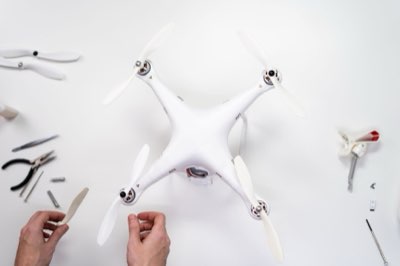
A technician sits at a workbench, surrounded by disassembled circuit boards and precision screwdrivers, meticulously measuring the voltage of a new component. There is no flashy music, only the methodical click of a multimeter and the focused silence of a professional at work.
This scene captures the essence of the leading German tech channels. While many global creators chase the latest viral gadget or "life hack," the top-tier German tech scene often focuses on rigorous testing and deep-dive hardware analysis.
There is a cultural tendency toward engineering precision that translates directly into video production.
This depth is a digital reflection of the nation's industrial identity. For instance, World Bank data shows that Germany recorded a high-technology share of manufactured exports of 18.0% in 2024.
This emphasis on high-tech manufacturing and engineering excellence is mirrored in the content structure of its creators. They don't just show a product; they dissect its architecture.
The result is a specific type of content that values longevity and utility over mere novelty. Viewers tune in to understand the mechanics of the digital age, seeking the same reliability they expect from the physical machines they use every day.
This makes the content highly educational and authoritative. However, the role of the creator goes beyond just being a teacher.
🚀 Navigating the Ecosystem: How do they manage information overload?
A person sits in a crowded cafe, staring at a smartphone screen while the world moves rapidly around them, looking slightly overwhelmed by the sheer volume of notifications and news. They pause, looking for a single reliable voice to make sense of the chaos.
In an age of information overload, the creator's role has evolved. They are no longer just personalities; they are interpreters. They serve as a bridge between the rapid, often confusing pace of global technological advancement and the practical needs of the consumer.
This role is essential because the complexity of modern technology can be daunting. As the service sector contributes around 70% of the total GDP, the economy is increasingly driven by information and digital services.
In this environment, the ability to curate and explain information is a valuable economic and social service.
These creators provide the "why" and the "how" behind the "what." They help the audience navigate a world where software updates and hardware cycles move faster than human comprehension. By providing structured, logical analysis, they turn the overwhelming sea of data into actionable knowledge.
But how do you actually find and use this information?

🛠️ Deep Dive: How to follow the best channels
To understand the depth of this scene, one must look at the specific creators who set the standard. While the following list represents the peak of technical analysis, it is a snapshot of a much larger and diverse ecosystem.
1. The Hardware Specialist This channel focuses on the "guts" of computing. Instead of lifestyle shots, you see macro lenses capturing the texture of PCB boards and the cooling efficiency of new thermal pastes.
Their signature content involves stress-testing components to the point of failure to find the true limits of consumer tech.
2. The Smart Home Architect This creator focuses on the intersection of the Internet of Things (IoT) and daily living. They don't just review a smart bulb; they explain the protocols and the security implications of a connected home.
Their videos are essential for anyone looking to build a cohesive, secure digital living environment.
3. The Mobile Ecosystem Expert Specializing in the rapidly evolving world of smartphones and tablets, this channel provides deep comparisons of processor architectures and camera sensor technology. They move beyond "is it pretty?" to "how does the NPU handle machine learning tasks?"
4. The Audio Engineering Purist For the audiophile, this channel is a sanctuary. They focus on the physics of sound, headphone driver technology, and the nuances of digital-to-analog conversion. Their content is a masterclass in how digital signals become physical experiences.
5. The Future-Tech Analyst This channel looks at the horizon, discussing AI, quantum computing, and emerging connectivity standards. They bridge the gap between current consumer tech and the industrial innovations that will shape the next decade.
| Feature | Trend-Chasing Content | German Tech Deep-Dives |
|---|---|---|
| Primary Goal | Entertainment / Virality | Education / Utility |
| Visual Style | High-energy / Fast cuts | Methodical / Clear / Detailed |
| Key Metric | Views and Likes | Trust and Retention |
| Subject Matter | The "Newest" gadget | The "Best" engineered gadget |
A checklist for effective learning:
- Identify your niche: Decide if you want lifestyle tech or pure engineering.
- Cross-reference data: Use the technical specs provided to compare with your own needs.
- Watch the full analysis: Avoid skipping to the end; the value is often in the methodical breakdown.
- Engage with the community: Use the comment sections to see how other technical minds debate the findings.
When I first started following these technical deep-dives, I found myself spending hours watching a single video on processor architecture. At first, it felt like too much information, but I soon realized that the time invested was actually saving me money on faulty hardware.
Note on limitations: This analysis focuses on the professional and educational value of tech content. It does not account for the entertainment value found in lifestyle vlogging or the subjective nature of aesthetic product reviews.
🌐 Global Perspectives and the Future: Will this influence the world?
A researcher in a quiet library in London looks at a screen showing a German tech video, nodding in approval at the detailed data charts presented on the screen. The information is universal, even if the language is specific.
According to the OECD, the Germany social security system comprises roughly 25% of GDP, which is high among OECD members.
The influence of German tech creators extends far beyond the borders of Europe. Because they deal with universal principles of physics, engineering, and logic, their content has a global appeal.
A well-explained breakdown of a new processor architecture is just as valuable to a viewer in New York as it is to one in Munich.
As the digital world becomes more integrated and the technology more complex, the demand for this type of rigorous, analytical content will only grow. The creators who succeed will be those who can maintain technical integrity while remaining accessible to a global audience.
The intersection of high-tech industrial roots and a massive, digitally-native population ensures that the German tech scene will remain a leader in the global creator economy. They aren't just reporting on the digital age; they are providing the manual for it.
#






Comments 0